THE NON FLUFF EMOTIONAL STUFF™

Gratitude as a Self-Management Tool- Shifting Your Focus to What Matters
When life feels overwhelming, our minds have a habit of zooming in on everything that’s wrong. The problem. The frustration. The disappointment. The thing that didn’t go to plan.
It’s not because we’re negative people — it’s because our brains are wired to notice threats and problems first. It’s a survival mechanism.
But while that wiring once helped keep our ancestors safe, it can also trap us in cycles of stress, worry, and dissatisfaction.
This is where gratitude becomes a powerful self-management tool.
Gratitude gently redirects our attention away from what’s missing and toward what’s already present.
Why Gratitude Works
Gratitude changes the lens through which we see our lives.
When we consciously look for things to appreciate, our brain begins to shift its focus. Instead of scanning the environment for problems, it starts recognising moments of goodness, connection, and possibility.
Research has shown that regularly practicing gratitude can:
-
Reduce stress and anxiety
-
Improve emotional resilience
-
Increase feelings of happiness and contentment
-
Strengthen relationships
-
Improve sleep and overall wellbeing
Gratitude doesn’t deny that challenges exist. It simply reminds us that challenges are not the whole story.

Gratitude and Emotional Balance
One of the most powerful aspects of gratitude is that it interrupts negative thought patterns.
When we’re stuck in frustration or disappointment, our thoughts tend to spiral. One problem leads to another, and suddenly everything feels heavier than it actually is.
Gratitude breaks that momentum.
It slows the mind and invites us to pause and notice what is still good, still working, still meaningful.
And often, the things that matter most are the simplest ones.
A supportive friend.
A moment of laughter.
A peaceful morning coffee.
A small win that moved us forward.

A Simple Gratitude Practice
You don’t need a complicated system to experience the benefits of gratitude. A few minutes each day is enough.
Try this simple exercise:
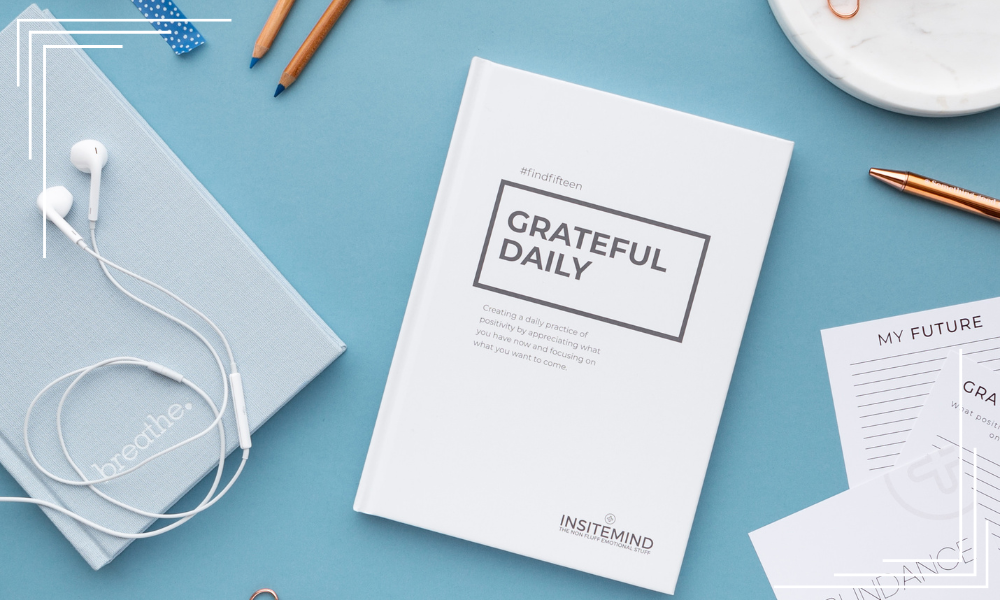
At the end of each day, write down three things you are grateful for.
They don’t need to be big.
In fact, the smaller and more ordinary they are, the more powerful the practice becomes.
You might write:
-
I’m grateful for the sunshine this morning.
-
I’m grateful for the conversation I had with a friend.
-
I’m grateful I handled a stressful moment better than I would have a year ago.
Over time, this practice trains your brain to naturally notice positive moments throughout the day.
Reliving the Moment
Another powerful part of gratitude is revisiting the feeling of the moment you appreciated.
Instead of simply listing something you’re grateful for, pause and recall it fully.
What did it feel like?
What emotions did it bring up?
Why did it matter to you?
Reliving the moment strengthens the emotional impact and helps anchor those positive experiences in your memory.

Gratitude Builds Emotional Strength
Self-management isn’t about pretending life is perfect.
It’s about learning how to guide your thoughts and emotions in ways that support your wellbeing.
Gratitude gives you that guidance.
It reminds you that even on difficult days, there are still moments of goodness available to notice.
And when we consistently focus on what is good, we strengthen our ability to stay grounded, hopeful, and emotionally balanced.

A Gentle Invitation
Tonight, before you go to bed, pause for a moment and ask yourself:
“What three things am I grateful for today?”
Write them down.
Not because life is perfect.
But because even in imperfect days, there is always something worth noticing.
And the more we notice it, the more it grows.
💫 At Insite Mind, we believe gratitude isn’t just a nice idea — it’s a practical tool for managing your thoughts, shifting your perspective, and strengthening emotional resilience.



Written by Alisa Pettit
It’s never too late for a lane change. Insite Mind is the brainchild of one woman who after a decade spinning in the hamster wheel of the accounting world gave it up to live out her heart work. But it didn’t come without challenge and a little nudge from the universe in the form of a book Dealing with Difficult People. Upon opening it Alisa was surprised to find in black and white text “maybe it’s you”. So after several ego deaths and many personal development books along the way Alisa Pettit found her way to coaching. Now a fully fledged positive mindset coach and personal mastery guru Ali’s work helps people find their way through mindset teachings.
CHECK OUT OUR MOST POPULAR BLOGS

Make the Most of Your Journaling Process

How & Why Should I Use Affrimations

How to Not Yell (Or Suppress!) In Times of Stress

Self Care Myths... #BUSTED!

5 Simple Ways To Kickstart Your Day (And Your Positivity!)

4 Ways You're Killing Your Confidence
Why Your New Year's Resolutions Fall Flat On Their Face

A Winter Solstice Reflection
For all general inquiries, please contact us at hello@insitemind.com.au
© Copyright. All rights reserved.